
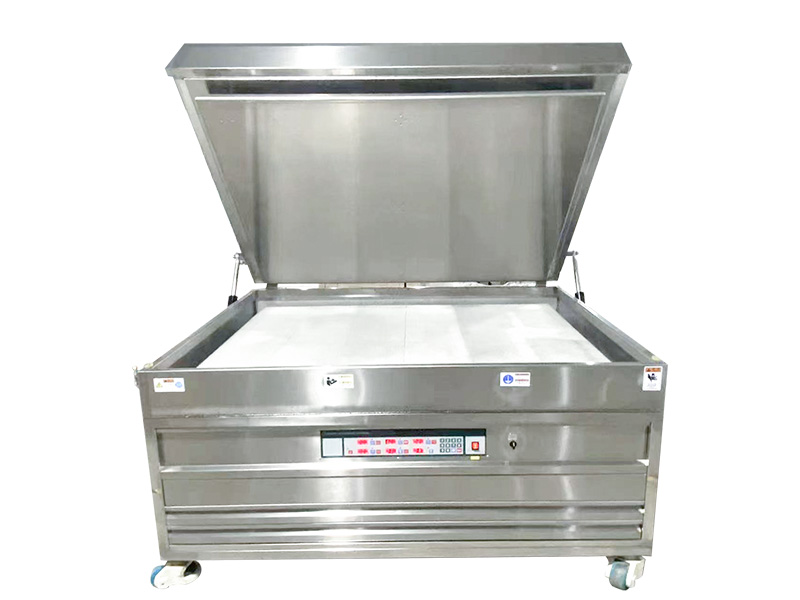
Short Answer: If you are sourcing a large format flexo plate making machine for corrugated carton, woven bag or flexible packaging printing, an all-in-one flexo plate processor that integrates exposure, washing, drying and de-tacking into one unit eliminates plate transfer damage, saves workshop floor space, and delivers consistent plate quality batch after batch. This complete buyer's guide covers how to choose the right flexo plate making machine for your production needs — including key technical specifications, all-in-one versus separate equipment comparison, compatible plate types, and application-specific recommendations for corrugated, woven bag and flexible packaging converters.
For corrugated carton printers, PP woven bag manufacturers and wide-web flexible packaging converters, handling large flexo plates (up to 1600x1000mm) with split standalone machines creates many costly headaches:
Our 1600x1000mm all-in-one flexo plate making machine perfectly solves all these pain points. It integrates four core processing sections into one stainless steel unit. No repeated plate moving, greatly lower plate damage rate and boost your overall productivity.
This integrated machine finishes full plate treatment in one continuous cycle without manual transfer:
This compact workflow is specially built for factories running large-size flexo plates, the most common size for carton, woven sack and flexible packaging printing.
| Max Plate Processing Size | 1600 x 1000 mm |
| Built-in Functions | Exposure, Washing, Drying, De-tacking |
| Whole Machine Material | Stainless Steel |
| UV Light Source | Imported Philips UVA & UVC Lamps |
| Vacuum Suction Membrane | Japan Toyo Slow Reflective Violet Membrane |
| Control System | Computer Controller |
| Auto Plate Loading & Unloading Lift | Standard Equipped |
| Power Supply | Single Phase 220V / 50Hz / 60Hz |
| Standard Production Lead Time | 40 Working Days |
The complete machine body adopts stainless steel structure. It resists rust, solvent corrosion and high humidity inside printing workshops. Unlike painted steel frames that rust after long-term solvent contact, our machine keeps stable structure for years of non-stop operation.
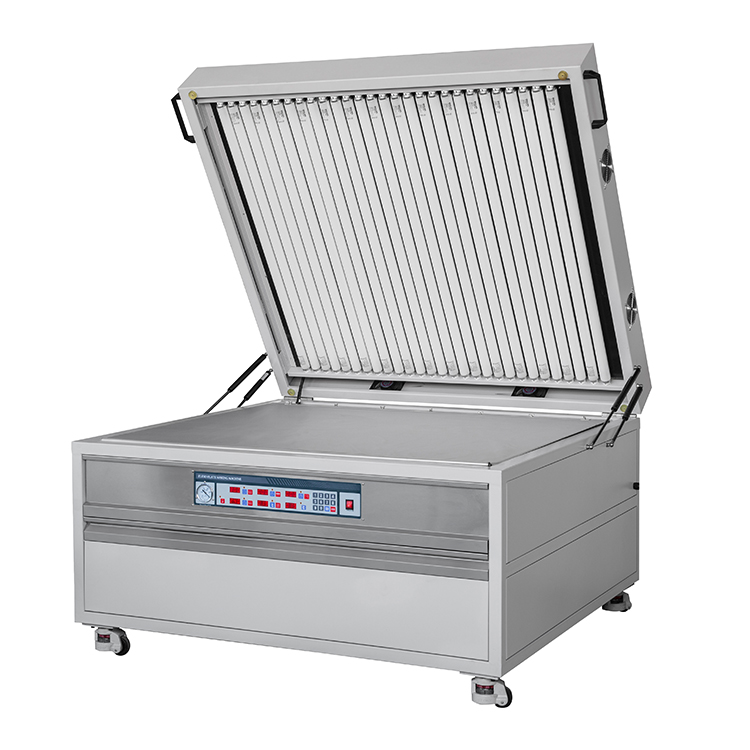
The exposure station matches Philips special UVA lamps and Philips frequency conversion rectifiers to guarantee precise graphic registration. After drying, Philips UVC light evenly eliminates surface tackiness, which is decisive for stable ink transfer on printing presses.
Tight vacuum lamination between film mask and photopolymer plate decides sharp graphic reproduction. The imported Toyo slow reflective violet membrane distributes vacuum force evenly across the full 1600x1000mm plate surface, eliminating air pockets and uneven exposure defects.
User-friendly computer control panel lowers operator training cost and reduces manual setting mistakes. All core parameters are digitally adjustable: exposure time, wash speed, drying temperature and de-tacking duration.
American digital integrated thermal sensors monitor drying temperature in real time. Stable heating prevents two common failures: brittle plates caused by over-drying, or residual solvent left by insufficient drying that ruins printing performance.
The wash section uses Panasonic/Oriental soft brush washers to clean tiny plate details without scratching fine lines. Matched Japan ORIX drying oven delivers balanced, powerful airflow for fast, uniform drying results.
Combining four separate machines into one single unit cuts your floor occupation greatly. It is an ideal choice for growing printing factories with limited production space.
The auto lifting system simplifies loading and unloading heavy 1600x1000mm large plates. It cuts workers' physical fatigue and accelerates your whole plate-making workflow.
When evaluating a large format flexo plate making machine, one of the first decisions is whether to go with an all-in-one integrated flexo plate processor or separate standalone equipment. Each approach affects your upfront investment, ongoing plate damage rate, and daily production efficiency.
| Decision Factor | All-in-One Machine | Separate Equipment |
| Plate Handling Steps | Load once, process continuously — no manual transfer between stages | Transfer plates 3–4 times between exposure, washout, dryer and de-tacking stations |
| Plate Damage Risk | Low — plates stay within the machine during the entire process. Significantly reduces flexo plate damage rate | High — each manual transfer risks scratching plate relief, especially for large 1600x1000mm plates |
| Floor Space Required | One compact unit — saves 40–50% workshop floor space compared to separate machines | 4 separate machines require significant production floor area plus transfer workspace |
| Operator Requirement | 1 operator manages the full workflow with computer controller monitoring all parameters | 2–3 operators needed across separate stations, higher labor cost |
| Quality Consistency | High — digital parameter control eliminates human variance between batch runs | Variable — different operators at different stations can cause quality inconsistency |
| Maintenance | Single machine with unified maintenance schedule — lower flexo plate processor maintenance cost | Multiple machines with independent maintenance schedules and spare parts inventory |
| Typical Daily Output | Continuous processing without waiting between stations — higher throughput per operator | Bottleneck risk at slowest station — workflow pauses when any single machine requires attention |
Separate flexo plate making equipment can be the right choice for very high-volume factories where each processing stage runs as a dedicated production line with its own operator — for example, large corrugated plants producing 100+ plates per shift on a single plate size. In these cases, parallel processing across separate stations can theoretically increase total output.
However, for the vast majority of corrugated carton, woven bag and flexible packaging converters, the all-in-one flexo plate making machine delivers better plate quality consistency, lower plate waste, and simplified operator training — all in a smaller workshop footprint. This is especially important for the 1600x1000mm plate format, where manual plate handling of separate machines creates the highest risk of surface scratches and relief edge damage.
According to the product specification, this 1600x1000mm all-in-one flexo plate making machine processes the following output media:
A full flexo plate production line includes three core links, and our integrated machine takes charge of the central processing stage:
Step 1: Plate Imaging
Digital workflow: Use independent flexo CTP machine to finish laser ablation. Analog workflow: Prepare traditional film negatives.
Step 2: Plate Processing (Handled by Our All-in-One Machine)
Complete exposure, washing, drying and de-tacking continuously on one device.
Step 3: Post Curing & Quality Inspection
Extra secondary UV post-exposure is optional for full resin polymerization. If you need higher mass production efficiency, check our BW-5280 Scan-Type UVA-LED Flexo Plate Exposure Machine for high-speed independent exposure of plates up to 52"x80".
Our standard 1600x1000mm model adopts solvent washout, the most widely recognized solution for high-precision photopolymer plates.
If your factory has strict environmental standards and requires low VOC emissions, we provide an eco alternative: BW Series Eco Water-Based All-in-One Flexo Plate Making Machine. It uses circulating water filtration instead of solvent and removes VOC pollution risks completely.
We bring professional export experience in flexo plate-making machinery, supplying printing factories across more than 60 countries worldwide. Our core strengths:
Q1: What plate types can this machine process?
A1: This machine processes analog flexographic printing plates and digital flexographic printing plates (except the laser exposure step). It is ideal for large format plates up to 1600 x 1000mm.
Q2: What functions are integrated in this all-in-one machine?
A2: It integrates exposure, washing, drying and de-tacking in one compact unit. There is no need to transfer plates between separate machines, which protects plate quality and saves workshop space.
Q3: What light sources are used?
A3: The machine uses imported Philip specific UVA lamps with Philip rectifier for exposure, and Philips specific UVC light source for removing the sticky layer after drying.
Q4: What is the power requirement?
A4: 220V/50Hz/60Hz, Single Phase. Compatible with standard industrial power supply in most countries.
Q5: What is the lead time?
A5: 40 days after deposit confirmation. For urgent or custom orders, please contact us for expedited scheduling.
Q6: What key components are imported?
A6: Key imported components include Philip UVA lamps with rectifier, Philips UVC light source, Japan Toyo suction membrane, American digital integrated thermo sensor, Japanese Panasonic/Oriental plate washer, and Japanese ORIX constant dry oven.
Are you sourcing large-format flexo plate making equipment for carton, woven bag or flexible packaging production? Our professional engineering team can customize machine configuration to match your plate size, voltage and output requirements.
Send Inquiry WhatsApp: +86 150 5142 1690


 0086 15051421690
 jack@szbowinglobal.comamy@szbowinglobal.com
 Room 2113, Building C, Caizhihui Business Building, No. 11588, East Taihu Avenue, Taihu New Town, Wujiang District,Suzhou,China